
Ideas are a great start, but real impact is what changes the game—and that’s exactly the focus of next Thursday Gathering #259. We’ve lined up a night packed with diverse perspectives, from the future of digital art and creativity to the latest forward-thinking ideas in health and wellbeing. You'll get a first look at exciting new projects from student innovators, alongside hands-on advice on how to legally safeguard your original work. Most importantly, we’re cutting through the noise with an honest guide to checking if your project makes sense and a lively debate on why it's time to stop talking and start doing.
Come connect with the people who are turning "what if" into reality and discover how to scale your vision while keeping your integrity intact.
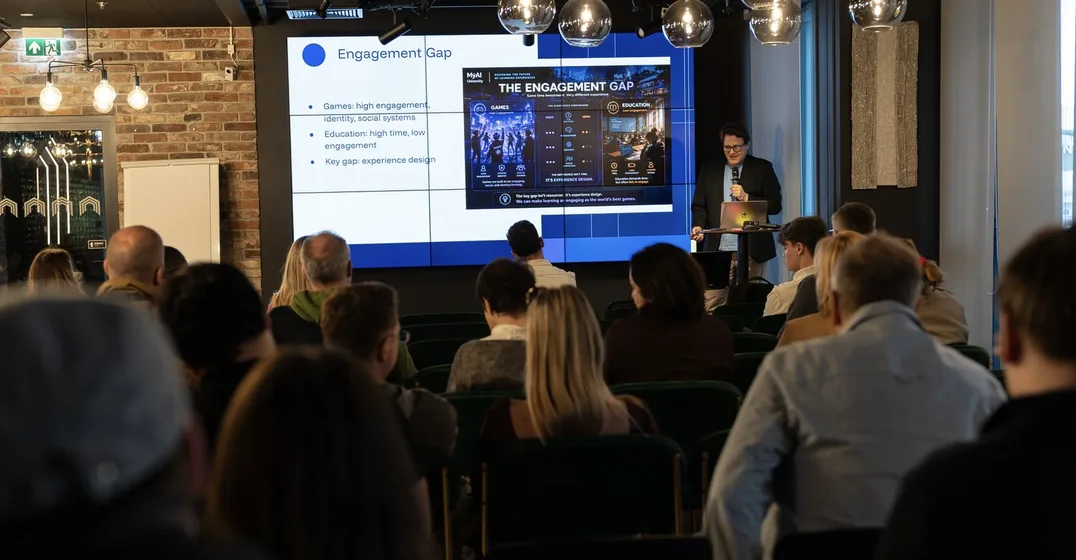

HERpreneur is an Erasmus+ Cooperation Partnership project that aims to remove the barriers facing young women entrepreneurs aged 18–30 in Poland, Spain and Türkiye. The 18-month programme is coordinated by YES – Young Entrepreneurs Society (PL), in partnership with MOBAD (PL), UCAM (ES) and FOCUS Coaching Academy (TR). The final day of international BootCampX training closes with a public DemoDay bringing together 20 young women entrepreneurs.
Session will briefly present the project, the BootCampX training modules and the participant journey. We will be able to see the path of the entrepreneurs during this programmee.
Additionally, five teams selected from the 20-person cohort will take the stage. They will present the pitch decks of their idea-stage ventures, built on what they learned during the training. Each pitch will be followed by a short Q&A for audience feedback.

Want to make sure you will have a slot for consultation?
Click this link to book specific time slot!
Unlock the Secrets to Protecting Your Ideas with our Expert Patent Attorney during our Info Table Session. Dive into the world of intellectual property legal tools including patents, designs, trademarks, trade secrets, and copyright. Whether you're a startup looking for guidance or an individual with innovative ideas in the early stages of development, this session is tailored just for you. Get ready to engage in open consultations where you can ask any burning questions on intellectual property and gain valuable insights to safeguard your creativity. Our seasoned patent attorney is here to provide expert advice and support to help you navigate the intricate legal landscape and ensure your ideas are well-protected. Don't miss this golden opportunity to learn, connect, and take your intellectual property strategy to the next level in a dynamic and stimulating environment. Join us at the Info Table session and embark on a journey towards securing the future of your ideas with confidence and assurance.

Podczas panelu przyjrzymy się bliżej najnowszym projektom kształtującym polski rynek kwantowy oraz wyzwaniom, z jakimi mierzą się naukowcy i komercjalizatorzy wiedzy.
Zastanowimy się również, jak skutecznie budować krajowy ekosystem, by za 10 lat polskie rozwiązania realnie i z sukcesem zmieniały globalne społeczeństwo.

W ramach Nano Business Lab projektu International Rescue Committee Polska (IRC), który wspiera osoby rozwijające mikro i nano biznesy w Polsce, zapraszamy na praktyczną sesję poświęconą marketingowi opartemu na relacjach. Spotkanie skierowane jest do właścicieli małych i średnich firm, którzy chcą zdobyć pierwszych klientów, budować wartościowe kontakty i rozwijać biznes w sposób świadomy.
Praktyczna sesja dla osób rozwijających mikro- i nano-biznesy, które chcą skuteczniej komunikować swoją ofertę, budować wiarygodność i zdobywać klientów na polskim rynku. Porozmawiamy o tym, jak mała firma może dobrze się pozycjonować, jak mówić o swojej wartości prostym językiem, jak unikać typowych błędów w komunikacji oraz jak budować zaufanie klientów bez dużego budżetu
reklamowego. Uczestnicy otrzymają konkretne wskazówki możliwe do wdrożenia od razu: jak uporządkować komunikację marki, jak przygotować podstawowy przekaz sprzedażowy, jak wykorzystywać media społecznościowe i stronę internetową oraz jak zwiększać wiarygodność firmy w oczach nowych klientów.

Rynek sztuki już dawno przestał być domeną wyłącznie kolekcjonerów kierujących się pasją. Dziś dzieła sztuki coraz częściej postrzegane są jako alternatywna klasa aktywów, przyciągająca inwestorów poszukujących dywersyfikacji portfela, długoterminowego wzrostu wartości oraz możliwości wspierania kultury i twórczości.
Jednak inwestowanie w sztukę różni się od inwestowania w akcje, nieruchomości czy surowce. Oprócz aspektów finansowych wymaga zrozumienia takich kwestii jak autentyczność dzieł, ich pochodzenie, trendy rynkowe oraz znaczenie artystyczne i kulturowe.
Ten panel połączy perspektywy przedstawicieli świata finansów, kolekcjonerstwa, galerii, instytucji kultury i artystów, aby przyjrzeć się temu, jak dziś powstaje wartość w ekosystemie sztuki. Co wpływa na wartość dzieła? Jakie czynniki kształtują popyt na rynku? Jak inwestorzy mogą zarządzać ryzykiem, jednocześnie wspierając rozwój twórców i instytucji kultury?
Poruszymy również temat droit de suite - prawa twórców do udziału w zyskach z odsprzedaży ich dzieł na rynku wtórnym - oraz jego znaczenia dla budowania bardziej zrównoważonego i sprawiedliwego rynku sztuki.
Czy sztuka może być jednocześnie atrakcyjną inwestycją i narzędziem wspierania społeczności twórczych? Jak rosnąca rola kapitału i inwestorów na rynku sztuki wpływa na artystów, kolekcjonerów i instytucje? I jak znaleźć równowagę między wartością ekonomiczną a kulturową dzieł sztuki?
Zapraszamy do dyskusji na styku sztuki, finansów i odpowiedzialności kulturowej.

Who is this for?
This session is for… founders who've quietly handed half their thinking over to AI, leaders asking what stays human when everything else gets automated, and anyone in the ecosystem who's brilliant on Zoom but secretly misses the kind of conversation that only happens face to face. No prep, no slides to study — just bring your curiosity.
What happens in the room?
We'll start with… a short, punchy hit of brain science — why your mind does its best wondering precisely when it's not being efficient, and what the Default Mode Network has to do with great ideas. …then break into small Coffideas tables: real people, one good question, one quick rotation. In a few minutes the room does live what no AI can — thinks out loud, together, and watches ideas catch fire between us.
What will guests walk away with?
Guests will leave knowing… the one thing machines will never do for them — wonder — and a simple, repeatable tool to spark it on purpose: a question good enough to turn any meeting into a real meeting. Plus the names and ideas of a few people they actually connected with, not just collected.

Sesja poświęcona będzie prezentacji innowacyjnych rozwiązań opracowanych przez studentów Warszawskiego Uniwersytetu Medycznego w ramach zajęć z projektowania i zarządzania innowacją. Projekty dotyczą m.in. zdrowia publicznego, dobrostanu, projektowania produktów medycznych, zdrowia środowiskowego oraz rozwiązań wspierających jakość życia i odporność miast na wyzwania środowiskowe, wpisując się również w praktyczny wymiar działań realizowanych w ramach EUniWell - europejskiego sojuszu uniwersytetów, do którego należy WUM.
Wybrane koncepcje są obecnie rozwijane we współpracy z Centrum Transferu Technologii WUM oraz rzecznikiem patentowym w kierunku dalszego rozwoju, budowy prototypów, wdrożenia oraz ochrony własności intelektualnej i przemysłowej poprzez przygotowanie zgłoszeń do Urzędu Patentowego Rzeczypospolitej Polskiej (UPRP). Dla jednego z prezentowanych rozwiązań pozyskano już środki na przygotowanie prototypu wdrożeniowego oraz dalsze prace rozwojowe związane z oceną funkcjonowania rozwiązania w środowisku operacyjnym.
Innowacje produktowe
- VesperBox
Justyna Dąbrowska, Gabriela Kozińska, Kasia Ambroziak - Pudełko na kleszcza
Alicja Walawander, Zuzanna Tumilowicz, Marta Zacharczuk - DinoDose – innowacyjna butelka do syropu dla dzieci
Małgorzata Radwańska, Claudia Irena Rakowicz-Przybysz - Easy Pee Si
Albina Zholnerkevich, Natalia Ziemian, Kamil Kalbarczyk, Patrycja Pawlicka - VELORA – kapsuła akustyczna wspierająca dobrostan
Maria Lipowska, Aleksandra Lublińska, Weronika Makowska, Julia Parol - Kar MIŚ
Hania Mierzejewska, Julia Szymańska, Ilona Snawacka - DualSip – bidon z podwójną komorą i selektorem napojów
Maksymilian Aszkiełowicz, Emilia Szklarczyk

Most organizations optimize AI for productivity. Very few optimize for cognition.
But what if the greatest risk of AI in the workplace is not automation — but the gradual erosion of human thinking, judgment, and innovation capacity?
As organizations rapidly adopt AI tools to increase productivity, many leaders are beginning to face an unexpected challenge: employees are working faster than ever, yet often with reduced focus, weaker critical thinking, and growing cognitive overload. We are entering the era of the Brain Economy, where human cognition itself becomes one of the most valuable organizational assets.
In this thought-provoking session, computational neuroscientist and Future of Work strategist Natalia Bielczyk introduces the concept of cognitive debt — the hidden long-term cost that emerges when organizations over-optimize for convenience, speed, and AI-assisted decision-making at the expense of deep thinking and human agency.
Drawing from neuroscience, psychology, elite chess training, and real-world organizational trends, the session explores how excessive reliance on AI may impact attention span, problem-solving, creativity, learning capacity, and team dynamics. Participants will examine why some of the world’s highest-performing individuals deliberately train without technology to strengthen mental endurance and decision-making under pressure.
Attendees will leave with practical strategies for building AI-ready organizations that preserve critical thinking, innovation, collective intelligence, and healthy human performance — while still leveraging the enormous benefits of AI.

Most student startup programs in Poland follow the same playbook: ideation workshops, a pitch competition, a Demo Day. The problem? That's where it ends - and most founders never build anything real.
START Warsaw took a different bet. As a student-run organization connecting best builders across various universities and Chapter #22 of the global START Network, we designed our program around one principle: the only real validation is a product someone actually uses.
In this session, we'll share what we learned from running START Sprint - a 3-week intensive hackathon-style competition where our members had to build and validate a real product from scratch. We'll talk about what got built, what broke, and what it revealed about what young founders in Poland actually need. And we'll make the case for why the student startup ecosystem needs to stop rewarding pitch decks and start rewarding products.
If you're an investor wondering why so few student startups make it past Demo Day, a mentor looking to plug into a community that actually builds things, a university program lead questioning whether your curriculum is serving founders - or simply someone who cares about what the next generation of Polish startups looks like, this session is for you.

Every founder hears it eventually: to win, you have to get ruthless. Purpose is a luxury. Empathy doesn't scale. But is that true — or is it the most expensive myth in business? This panel brings together a builder, a storyteller, an investor, and someone working at the frontlines of impact to argue it out: can you build something genuinely big without hollowing out the thing that made it matter? Expect disagreement. We're not here to agree that "doing good is good business" — we're here to test whether it actually holds when the pressure's on.
















Ideas are a great start, but real impact is what changes the game—and that’s exactly the focus of next Thursday Gathering #259. We’ve lined up a night packed with diverse perspectives, from the future of digital art and creativity to the latest forward-thinking ideas in health and wellbeing. You'll get a first look at exciting new projects from student innovators, alongside hands-on advice on how to legally safeguard your original work. Most importantly, we’re cutting through the noise with an honest guide to checking if your project makes sense and a lively debate on why it's time to stop talking and start doing.
Come connect with the people who are turning "what if" into reality and discover how to scale your vision while keeping your integrity intact.
HERpreneur is an Erasmus+ Cooperation Partnership project that aims to remove the barriers facing young women entrepreneurs aged 18–30 in Poland, Spain and Türkiye. The 18-month programme is coordinated by YES – Young Entrepreneurs Society (PL), in partnership with MOBAD (PL), UCAM (ES) and FOCUS Coaching Academy (TR). The final day of international BootCampX training closes with a public DemoDay bringing together 20 young women entrepreneurs.
Session will briefly present the project, the BootCampX training modules and the participant journey. We will be able to see the path of the entrepreneurs during this programmee.
Additionally, five teams selected from the 20-person cohort will take the stage. They will present the pitch decks of their idea-stage ventures, built on what they learned during the training. Each pitch will be followed by a short Q&A for audience feedback.
Want to make sure you will have a slot for consultation?
Click this link to book specific time slot!
Unlock the Secrets to Protecting Your Ideas with our Expert Patent Attorney during our Info Table Session. Dive into the world of intellectual property legal tools including patents, designs, trademarks, trade secrets, and copyright. Whether you're a startup looking for guidance or an individual with innovative ideas in the early stages of development, this session is tailored just for you. Get ready to engage in open consultations where you can ask any burning questions on intellectual property and gain valuable insights to safeguard your creativity. Our seasoned patent attorney is here to provide expert advice and support to help you navigate the intricate legal landscape and ensure your ideas are well-protected. Don't miss this golden opportunity to learn, connect, and take your intellectual property strategy to the next level in a dynamic and stimulating environment. Join us at the Info Table session and embark on a journey towards securing the future of your ideas with confidence and assurance.
Podczas panelu przyjrzymy się bliżej najnowszym projektom kształtującym polski rynek kwantowy oraz wyzwaniom, z jakimi mierzą się naukowcy i komercjalizatorzy wiedzy.
Zastanowimy się również, jak skutecznie budować krajowy ekosystem, by za 10 lat polskie rozwiązania realnie i z sukcesem zmieniały globalne społeczeństwo.
W ramach Nano Business Lab projektu International Rescue Committee Polska (IRC), który wspiera osoby rozwijające mikro i nano biznesy w Polsce, zapraszamy na praktyczną sesję poświęconą marketingowi opartemu na relacjach. Spotkanie skierowane jest do właścicieli małych i średnich firm, którzy chcą zdobyć pierwszych klientów, budować wartościowe kontakty i rozwijać biznes w sposób świadomy.
Praktyczna sesja dla osób rozwijających mikro- i nano-biznesy, które chcą skuteczniej komunikować swoją ofertę, budować wiarygodność i zdobywać klientów na polskim rynku. Porozmawiamy o tym, jak mała firma może dobrze się pozycjonować, jak mówić o swojej wartości prostym językiem, jak unikać typowych błędów w komunikacji oraz jak budować zaufanie klientów bez dużego budżetu
reklamowego. Uczestnicy otrzymają konkretne wskazówki możliwe do wdrożenia od razu: jak uporządkować komunikację marki, jak przygotować podstawowy przekaz sprzedażowy, jak wykorzystywać media społecznościowe i stronę internetową oraz jak zwiększać wiarygodność firmy w oczach nowych klientów.
Rynek sztuki już dawno przestał być domeną wyłącznie kolekcjonerów kierujących się pasją. Dziś dzieła sztuki coraz częściej postrzegane są jako alternatywna klasa aktywów, przyciągająca inwestorów poszukujących dywersyfikacji portfela, długoterminowego wzrostu wartości oraz możliwości wspierania kultury i twórczości.
Jednak inwestowanie w sztukę różni się od inwestowania w akcje, nieruchomości czy surowce. Oprócz aspektów finansowych wymaga zrozumienia takich kwestii jak autentyczność dzieł, ich pochodzenie, trendy rynkowe oraz znaczenie artystyczne i kulturowe.
Ten panel połączy perspektywy przedstawicieli świata finansów, kolekcjonerstwa, galerii, instytucji kultury i artystów, aby przyjrzeć się temu, jak dziś powstaje wartość w ekosystemie sztuki. Co wpływa na wartość dzieła? Jakie czynniki kształtują popyt na rynku? Jak inwestorzy mogą zarządzać ryzykiem, jednocześnie wspierając rozwój twórców i instytucji kultury?
Poruszymy również temat droit de suite - prawa twórców do udziału w zyskach z odsprzedaży ich dzieł na rynku wtórnym - oraz jego znaczenia dla budowania bardziej zrównoważonego i sprawiedliwego rynku sztuki.
Czy sztuka może być jednocześnie atrakcyjną inwestycją i narzędziem wspierania społeczności twórczych? Jak rosnąca rola kapitału i inwestorów na rynku sztuki wpływa na artystów, kolekcjonerów i instytucje? I jak znaleźć równowagę między wartością ekonomiczną a kulturową dzieł sztuki?
Zapraszamy do dyskusji na styku sztuki, finansów i odpowiedzialności kulturowej.
Who is this for?
This session is for… founders who've quietly handed half their thinking over to AI, leaders asking what stays human when everything else gets automated, and anyone in the ecosystem who's brilliant on Zoom but secretly misses the kind of conversation that only happens face to face. No prep, no slides to study — just bring your curiosity.
What happens in the room?
We'll start with… a short, punchy hit of brain science — why your mind does its best wondering precisely when it's not being efficient, and what the Default Mode Network has to do with great ideas. …then break into small Coffideas tables: real people, one good question, one quick rotation. In a few minutes the room does live what no AI can — thinks out loud, together, and watches ideas catch fire between us.
What will guests walk away with?
Guests will leave knowing… the one thing machines will never do for them — wonder — and a simple, repeatable tool to spark it on purpose: a question good enough to turn any meeting into a real meeting. Plus the names and ideas of a few people they actually connected with, not just collected.
Sesja poświęcona będzie prezentacji innowacyjnych rozwiązań opracowanych przez studentów Warszawskiego Uniwersytetu Medycznego w ramach zajęć z projektowania i zarządzania innowacją. Projekty dotyczą m.in. zdrowia publicznego, dobrostanu, projektowania produktów medycznych, zdrowia środowiskowego oraz rozwiązań wspierających jakość życia i odporność miast na wyzwania środowiskowe, wpisując się również w praktyczny wymiar działań realizowanych w ramach EUniWell - europejskiego sojuszu uniwersytetów, do którego należy WUM.
Wybrane koncepcje są obecnie rozwijane we współpracy z Centrum Transferu Technologii WUM oraz rzecznikiem patentowym w kierunku dalszego rozwoju, budowy prototypów, wdrożenia oraz ochrony własności intelektualnej i przemysłowej poprzez przygotowanie zgłoszeń do Urzędu Patentowego Rzeczypospolitej Polskiej (UPRP). Dla jednego z prezentowanych rozwiązań pozyskano już środki na przygotowanie prototypu wdrożeniowego oraz dalsze prace rozwojowe związane z oceną funkcjonowania rozwiązania w środowisku operacyjnym.
Innowacje produktowe
- VesperBox
Justyna Dąbrowska, Gabriela Kozińska, Kasia Ambroziak - Pudełko na kleszcza
Alicja Walawander, Zuzanna Tumilowicz, Marta Zacharczuk - DinoDose – innowacyjna butelka do syropu dla dzieci
Małgorzata Radwańska, Claudia Irena Rakowicz-Przybysz - Easy Pee Si
Albina Zholnerkevich, Natalia Ziemian, Kamil Kalbarczyk, Patrycja Pawlicka - VELORA – kapsuła akustyczna wspierająca dobrostan
Maria Lipowska, Aleksandra Lublińska, Weronika Makowska, Julia Parol - Kar MIŚ
Hania Mierzejewska, Julia Szymańska, Ilona Snawacka - DualSip – bidon z podwójną komorą i selektorem napojów
Maksymilian Aszkiełowicz, Emilia Szklarczyk
Most organizations optimize AI for productivity. Very few optimize for cognition.
But what if the greatest risk of AI in the workplace is not automation — but the gradual erosion of human thinking, judgment, and innovation capacity?
As organizations rapidly adopt AI tools to increase productivity, many leaders are beginning to face an unexpected challenge: employees are working faster than ever, yet often with reduced focus, weaker critical thinking, and growing cognitive overload. We are entering the era of the Brain Economy, where human cognition itself becomes one of the most valuable organizational assets.
In this thought-provoking session, computational neuroscientist and Future of Work strategist Natalia Bielczyk introduces the concept of cognitive debt — the hidden long-term cost that emerges when organizations over-optimize for convenience, speed, and AI-assisted decision-making at the expense of deep thinking and human agency.
Drawing from neuroscience, psychology, elite chess training, and real-world organizational trends, the session explores how excessive reliance on AI may impact attention span, problem-solving, creativity, learning capacity, and team dynamics. Participants will examine why some of the world’s highest-performing individuals deliberately train without technology to strengthen mental endurance and decision-making under pressure.
Attendees will leave with practical strategies for building AI-ready organizations that preserve critical thinking, innovation, collective intelligence, and healthy human performance — while still leveraging the enormous benefits of AI.
Most student startup programs in Poland follow the same playbook: ideation workshops, a pitch competition, a Demo Day. The problem? That's where it ends - and most founders never build anything real.
START Warsaw took a different bet. As a student-run organization connecting best builders across various universities and Chapter #22 of the global START Network, we designed our program around one principle: the only real validation is a product someone actually uses.
In this session, we'll share what we learned from running START Sprint - a 3-week intensive hackathon-style competition where our members had to build and validate a real product from scratch. We'll talk about what got built, what broke, and what it revealed about what young founders in Poland actually need. And we'll make the case for why the student startup ecosystem needs to stop rewarding pitch decks and start rewarding products.
If you're an investor wondering why so few student startups make it past Demo Day, a mentor looking to plug into a community that actually builds things, a university program lead questioning whether your curriculum is serving founders - or simply someone who cares about what the next generation of Polish startups looks like, this session is for you.
Every founder hears it eventually: to win, you have to get ruthless. Purpose is a luxury. Empathy doesn't scale. But is that true — or is it the most expensive myth in business? This panel brings together a builder, a storyteller, an investor, and someone working at the frontlines of impact to argue it out: can you build something genuinely big without hollowing out the thing that made it matter? Expect disagreement. We're not here to agree that "doing good is good business" — we're here to test whether it actually holds when the pressure's on.